One of the most common misconceptions about business finance is that you need to own property, or be willing to use your home as security, before a lender will consider helping your business.
The good news? That isn’t always the case.
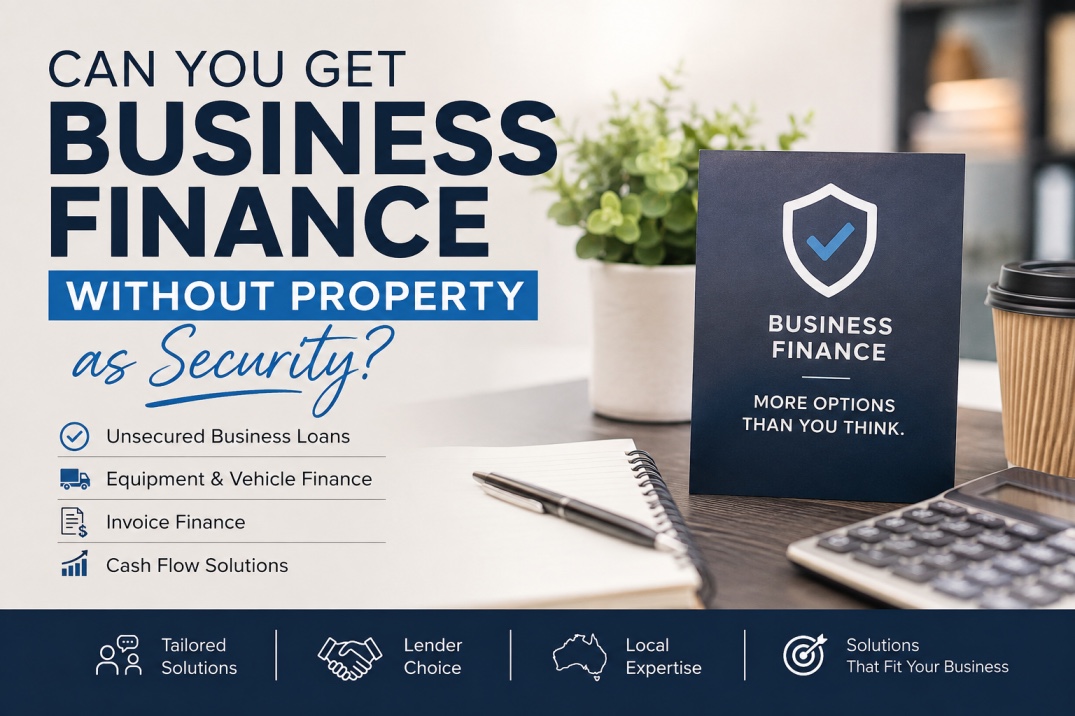
There are a number of ways Australian businesses may be able to access finance without using residential or commercial property as security.
The right option will depend on your business, how long you’ve been operating, your financial position, what the funds are being used for and how much you need to borrow.
Secured vs Unsecured Business Finance
Firstly, it helps to understand the difference.
A secured business loan is backed by an asset. Depending on the loan, this could be property, equipment, a vehicle or another business asset.
An unsecured business loan doesn’t require a specific asset to be provided as security. Instead, the lender will generally place greater emphasis on the financial strength of the business and its ability to repay the debt.
Because the lender is taking on greater risk without an asset as security, unsecured finance can come with different lending limits, terms, interest rates and assessment requirements.
But unsecured doesn’t necessarily mean unavailable.
What Business Finance Options Don’t Require Property?
Depending on your circumstances, there may be several options.
Unsecured Business Loans
An unsecured business loan can potentially be used for things such as:
- Business expansion
- Working capital
- Marketing
- Stock or inventory
- Fit-outs
- Unexpected expenses
- Taking advantage of a business opportunity
Lenders may consider factors such as your business turnover, profitability, cash flow, trading history and existing debts when assessing an application.
Vehicle and Equipment Finance
If you’re purchasing a vehicle, machinery or equipment, you may not need to use your property as security.
In many cases, the asset being purchased can form part of the security for the finance.
For a tradesperson, for example, this might mean financing a new work vehicle or piece of machinery without needing to secure the loan against their home.
Invoice Finance
For businesses that invoice other businesses and wait for those invoices to be paid, invoice finance may provide another option.
Rather than borrowing against property, funding can be linked to outstanding invoices.
This can potentially help businesses manage the gap between completing work and actually receiving payment from customers.
Lines of Credit and Other Cash-Flow Facilities
Some businesses may also qualify for a line of credit or other working-capital facility.
A line of credit generally provides access to an approved limit that the business can draw from when required, rather than receiving the entire loan amount upfront.
This can be useful for businesses experiencing seasonal cash-flow fluctuations or wanting access to additional funds when opportunities arise.
What Will a Lender Look At?
Not having property as security doesn’t mean lenders stop assessing risk.
In fact, the strength of the business itself can become even more important.
Depending on the lender and type of finance, they may look at things such as:
- How long the business has been trading
- Annual turnover
- Profitability
- Business bank statements
- Cash flow
- Existing business debts
- The directors’ credit history
- The purpose of the funds
- The amount being requested
- The business’s ability to service the new debt
Different lenders also have very different appetites when it comes to business finance.
That’s why being declined by one lender doesn’t necessarily mean there aren’t other options worth exploring.
Does Unsecured Finance Cost More?
It can.
When a lender doesn’t have property or another asset supporting a loan, they’re generally taking on more risk.
That can mean a higher interest rate, shorter loan term, lower borrowing limit or different fees compared with some secured lending options.
This is also why it’s important to look beyond the advertised interest rate.
The structure of the finance, repayments, fees, loan term and impact on your business’s cash flow all matter.
The cheapest-looking loan isn’t necessarily the most suitable one for your business.
Should You Use Property as Security If You Have It?
That’s a different question, and the answer isn’t automatically yes or no.
Property-backed business finance may provide access to different rates, loan amounts or terms. But using property as security also means putting that asset behind the debt.
For some business owners, that may make sense. For others, keeping their business and personal assets more separate may be important.
This is where comparing the available structures can be valuable.
Instead of starting with “Which lender has the cheapest business loan?”, we prefer to start with:
What are you trying to achieve?
From there, we can look at the finance options available and how they could fit with the business.
Business Finance Isn’t One-Size-Fits-All
Business lending can look very different from a standard home loan.
A café purchasing equipment has very different needs from a builder managing cash flow between projects. And a business purchasing its own commercial premises requires a completely different structure again.
At Your Finance Broker, we can help with a range of business and commercial finance solutions, including business loans, cash-flow solutions, equipment and vehicle finance, commercial property and property-backed business lending.
So, if you’ve been putting off exploring business finance because you don’t own property, or simply don’t want to use your home as security — it’s worth having the conversation.
There may be more options available than you realise.
Want to explore your business finance options?
Whether you’re looking to grow, purchase equipment, manage cash flow or fund your next business opportunity, we can help you understand the lending options available.
Get in touch with Your Finance Broker to discuss your business and what you’re hoping to achieve.
General information only. This information does not take into account your individual objectives, financial situation or needs. Lending criteria, fees, charges and eligibility requirements vary between lenders and products.